If you have a garden, but hate gardening, you could be forgiven for thinking that winter is time for a break from it. After all, nothing is growing or needs attention, and the weather is too cold and wet to do anything useful anyway. Right?
Wrong!
One of the secrets of having a beautiful garden this spring and summer is looking after it over the winter months. But if you haven’t been doing that, don’t worry. There is still plenty you can do now, as spring is approaching, to make things better.
In this article we look at six things to do now to get your garden ready for spring and summer.
The great big garden clear up : Part One
The first thing to do is actually get out into the garden and get started. And the best way to do this is to have a great big clear up. This is something that the whole family could get involved in, and you could make it fun with outdoor drinks and snacks to keep you going.
For the first part of your clear up, focus on four main things:
- Clear all weeds from flowerbeds, paths and patios. The best way is to pull them up by the roots but you may need to use weed killer on the more stubborn ones. Either way, make sure they are completely gone as this will drastically reduce the amount of weeding you will need to do later in the year.
- Cut back trees, climbing plants and other large plants as much as possible. This will make them ready for new healthy growth in the spring. Also take time to check individual plants as these may need more tailored pruning, and flowering plants may need deadheading.
- Sweep or rake up all leaves still remaining from autumn.
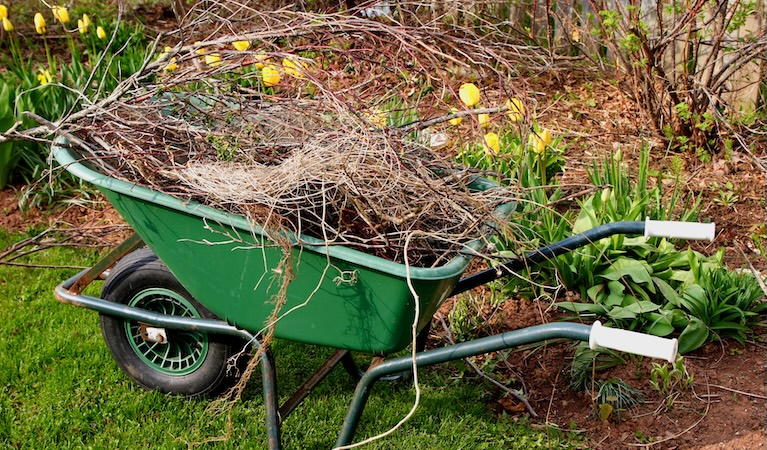
- The only remaining thing to do is to get rid of all the garden rubbish. Some of it will need to go into your green bin, if you have one, or to the local refuse site. But a lot of it – such as leaves, weeds and plant trimmings – could be used to make compost. Let’s take a quick look . . .
Make compost
Compost is a material rich in nutrients which provides excellent nourishment for soil and helps plants to grow. Compost is usually created from recycled organic materials, usually a mix of green and brown items. Green items are high in nitrogen and brown items are high in carbon. The best balance for compost is a ration of approximately two parts brown to one part green.
Examples of green and brown materials to include in compost are:
- Green
- Grass clippings
- Weeds
- Old flowers and prunings
- Fruit and vegetable skins, peelings and cuttings
- Eggshells
- Teabags and coffee grounds
- Hair and pet fur clippings
- Brown
- Leaves
- Pine needles
- Paper, newspaper or cardboard
- Egg boxes
- Sawdust or wood chips
- Straw
- Old plant-based fabrics such as cotton or linen
To make compost, all you need to do is designate a bin, pallet, or area for your compost. Ideally this should be on soil rather than concrete, and on a level spot where excess water can drain away. Choose partial sun or shade so that your compost does not dry out. Once you have the location, just layer up green and brown items then leave to break down.
To use compost, simply mix it into garden beds or containers either before planting or around existing plants to boost nutrients. It can also be very effective as a top layer – mulch – to help suppress weeds and keep your flowerbeds moist.
The great big garden clear up : Part Two
As spring approaches, it’s also a great time to clear out any outbuildings you have. For example, garages, sheds and summerhouses. It’s much better to get this done now rather than having to spend time on a lovely sunny day doing it.
All of these kinds of buildings can end up being a chaotic mess. Everything just gets stuffed in there. So the best thing to do is to get everything out and give the insides a good clean. Then sort all the contents into what you do and don’t want to keep. Be ruthless! Put things back in an orderly way so that you will be able to find things as you need them.
Also, as you put things back, make sure they are in the best condition. Look particularly at your garden tools. Give them a good clean if needed and, if any items are rusty, remove this with either sandpaper or a wire brush. Also if anything needs fixing, such as loose handles or screws, take time to do the job now. Otherwise when you come to use that tool it will let you down, which will be frustrating. It’s also a good idea to oil the surfaces of your metal tools to help to protect them and extend their life.
Find sustainable ways to get rid of the things you are not keeping. For example, if anything could be of use to someone else, advertise it on a local site such as Facebook Marketplace. Depending on its condition, you may be able to get a bit of money for it. But even if you end up giving it away, it’s better than taking up space in your outbuilding.
Check garden fixtures, fences and furniture
Early spring is also a good opportunity to make sure that all garden fixtures, fences and furniture are in as good a condition as they can be. So firstly check the exteriors of outbuildings to see if anything needs repairing. If so, get it sorted now so that it can serve you well over spring and summer. It’s also a good time to give your fence a fresh coat of paint if needed. Ideally look for fence paint that is designed to protect your fence and prevent damage from water, sunlight, rot and decay.
Also get out all your garden furniture and give it a good clean. Wooden garden furniture will benefit from a coat of oil to keep it in top condition, and you may also decide to repaint it. Make sure your garden furniture is either stored inside or is well covered up until the warmer weather comes so that it is in the best condition it can be.
Planting and watering
If you want to plan ahead for your summer garden, there are a variety of plants that can be grown over winter, both inside and out.
You can plant flower seeds such as geraniums, begonia, antirrhinums and cyclamen inside in a greenhouse, conservatory or kitchen. Outside planting is possible for flowering bulbs such as tulips, daffodils and hyacinths and a variety of shrubs, small trees, climbers and hedges such as cotoneaster, ivy, or lavender.
And don’t neglect your grass over winter. Grass is evergreen and is vulnerable to damage over winter even though it becomes dormant. Try to avoid excess walking on it, perhaps by putting down a covering such as wood or strong card to protect it.
It’s also a good idea to aerate your lawn over winter using either an aerator or garden fork. This enables the soil under the grass to drain freely. You can make this even more effective by filling the resulting holes with compost, as this will help to improve drainage.
Look after the wildlife
Last but not least, if you have wildlife in your garden, make sure you look after them too. Bear in mind that many small mammals – such as hedgehogs, dormice and bats – hibernate over winter, so keep a careful eye open for them while you are doing all your garden clearing.
If you have birds in your garden, leave out nuts, seeds and fat balls for them to eat, and also make sure they have access to fresh water. Also make sure that you have clean nesting boxes ready for them to use in spring.
Insects are vital for a healthy garden ecosystem. They are likely to overwinter in the leaves and stems on your plants, and you might also want to make a simple bug hotel from wood, sticks, hollow plant stems and pine cones to make a welcoming place for them to hide.
We hope that this article has given you a few ideas as to how to get your garden ready for spring. If in the process you decide to invest a bit more heavily in your garden and need some additional funding, remember Loans 2 Go offer a range of personal loans which may be able to help. Full details, including terms and conditions are available on our website. Borrowing is optional and may not be suitable for everyone, so always consider your circumstances and affordability before applying.
Do visit us here again soon at Loans 2 Go for more useful hints and tips on everyday living.

 How to Give Your Finances a One-Hour MOT

