
We use cookies to improve your experience on our websites and to analyse how and when our sites are used. By clicking 'Accept all & continue' you're agreeing to our use of cookies. To learn more about the cookies we use, you can read our cookie policy.
Opt out of non-essential cookiesLate repayment can cause you serious money problems. For independent help, please go to www.moneyhelper.org.uk
Essential maintenance is due to commence this Sunday 25th October
Aug 08, 2026
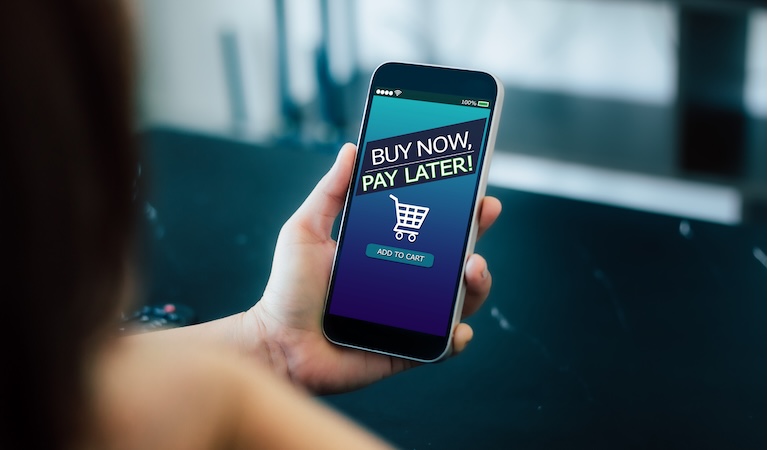
Buy Now, Pay Later can make an expensive purchase feel much more manageable.
Instead of paying the full price at the checkout, you divide the cost into several smaller payments. In many cases, there is no interest to pay if everything goes according to plan.
But smaller payments do not mean a smaller purchase.
BNPL is a form of borrowing, and problems can arise if repayments overlap, your circumstances change or you lose track of what is due.
Understanding those risks before pressing the button can help you decide whether spreading the cost is genuinely useful or simply making an unaffordable purchase look more affordable.
Buy Now, Pay Later, usually shortened to BNPL, allows you to receive goods or services now and pay for them over time.
The exact arrangement depends on the provider. You might be able to:
Some BNPL arrangements are interest-free, provided payments are made according to the agreement.
That can make BNPL useful for managing the timing of an expense. However, it should still be treated as borrowing rather than as an alternative form of debit-card payment.
Before using it, make sure you understand how much you owe, when every instalment is due and what happens if you cannot pay.
The rules surrounding BNPL in the UK have changed.
From 15 July 2026, Deferred Payment Credit, the type of interest-free BNPL covered by the new rules, came under Financial Conduct Authority regulation.
This means affected lenders must meet regulatory requirements designed to give borrowers stronger protection.
For consumers, this includes greater expectations around clear information, assessing whether borrowing is affordable and providing appropriate support when customers experience financial difficulty.
Regulation offers important protection, but it does not remove the need to consider whether the borrowing is affordable for you.
One of the risks of BNPL is assuming that a missed instalment does not matter because the original agreement was interest-free.
That is not necessarily the case. And more often than not the biggest ‘trap’ of BNPL.
Depending on the provider and agreement, missing a payment could result in action being taken on the account, additional fees and could affect your credit record.
A poor payment history may then make it harder or more expensive to obtain borrowing in the future.
If you think you will struggle to make an upcoming payment, contact the provider as early as possible rather than simply allowing the payment to be missed. They may be able to discuss your circumstances and explain what support is available.
Do not assume that every BNPL agreement works in exactly the same way.
Some providers may charge particular fees in certain circumstances, while others may not.
Before agreeing to anything, check:
The important figure is not simply the amount of the first instalment. You need to understand the full agreement.
BNPL repayments are often collected automatically, which can make them easy to forget.
Automatic collection can be convenient when there is enough money in your account. The problem comes when several payments leave around the same time or your account balance is lower than expected.
Instead of relying on the provider to remind you, record each repayment when you make the purchase.
Check:
An instalment of £25 may look manageable on its own. Four different £25 instalments due during the same week is now a £100 commitment.
It is the total that matters.
This is one of the easiest BNPL risks to overlook.
Imagine you use BNPL for:
You may never have felt as though you borrowed £600 because each transaction happened separately.
But your household budget still has to absorb £600 of repayments.
Before taking another BNPL agreement, check how much you already owe across every provider you use.
One simple approach is to keep a note containing:
Seeing all your borrowing in one place can make it much easier to judge whether another purchase is sensible.
Not every BNPL cost appears as a fee. Sometimes the real cost is spending more than you would have spent if the full price had appeared at the checkout.
Consider a £260 jacket.
Paying £260 today feels very different from seeing four payments of £65, even though the purchase still costs £260.
That smaller number can influence how affordable the item feels.
Before choosing BNPL, ask yourself:
Would I still buy this if I had to pay the full price today?
If the answer is no, consider whether the payment structure is encouraging the purchase rather than simply helping you manage its timing.
It is risky to assume BNPL is invisible to other lenders.
Credit providers use information about how people manage borrowing when deciding whether to lend and on what terms.
Missed payments can negatively affect your credit history and may affect your ability to obtain credit in the future.
This matters beyond online shopping.
When applying for borrowing such as a credit card, personal loan, car finance or even a mortgage, lenders may consider your existing commitments and how reliably you have managed credit. Being turned down for a mortgage on your first home because of missed payments on a designer jacket you didn’t really need would be a painful reminder that a short-term purchase can have much longer-term consequences. Suddenly, that jacket doesn’t seem quite so worth it.
Treating BNPL repayments with the same seriousness as other credit commitments is therefore sensible.
The words “0% interest” can be reassuring, but interest is only one consideration when borrowing.
You should also think about:
A product does not need to charge interest to cause financial difficulty.
Borrowing £260 still means finding £260 from future income.
Problems with purchases can become more complicated when a credit provider sits between you and the retailer.
If goods are faulty, do not arrive or need to be returned, check both the retailer’s process and your BNPL provider’s procedures.
Keep:
If a refund is expected, continue checking your repayment account rather than assuming future instalments have automatically been cancelled.
If you have a complaint about a regulated BNPL lender, use the firm’s formal complaints procedure.
Consider avoiding BNPL if:
In those situations, adding another repayment commitment may make an existing problem harder to manage.
Ultimately Buy Now, Pay Later can be convenient, particularly when you know an expense is affordable but want to manage when the money leaves your account.
But convenience should not disguise what is happening.
You are borrowing money.
The potential costs are not limited to interest. Missed payments, damage to your credit history, overlapping commitments and spending more than you intended can all have a longer-lasting effect on your finances.
Before choosing BNPL, look beyond the small number displayed at the checkout.
Ask yourself how much you are spending in total, how much you already owe and whether every repayment will still be affordable alongside the rest of your household bills.
If the answer is yes, BNPL may be a useful way to manage the timing of a purchase.
If the smaller instalments are the only thing making the purchase feel affordable, that may be a good reason to reconsider it.
This blog/article provides general information only and does not constitute financial advice.

 Priority and Non-Priority Debts: What Should You Pay First?
